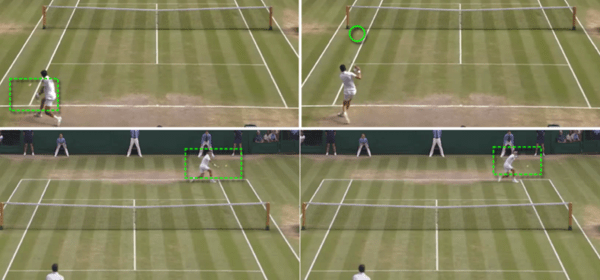
Enhancing Tennis Performance: The Role of Perceptual-Cognitive Skills

Tennis game is characterized by the short distances between contestants (baseline to baseline distance is 24 m) with players’ changeable (and unpredictable) stroke executions imposing spatiotemporal constraints on opponents’ decision-making and movement response. As reaction time presents a time spent from detecting a stimulus to creating a movement response, receivers with quicker reaction time should be able to decide and create an earlier movement response, decreasing the sense of urgency when transitioning from their current position to the position of impact
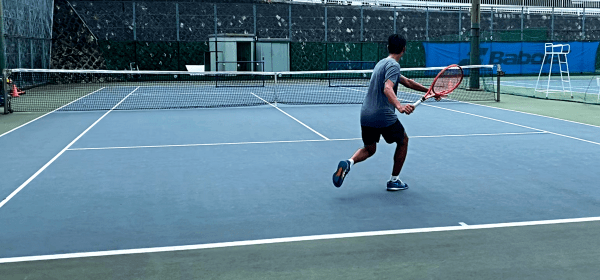
Tennis game, the game of momentum / テニスの試合、勢いのゲーム

テニスは、空間と時間によって決められた目標である特定のインターセプトポイントに到達するために、一定のペースと強度の動きを作り出すことを目的としたスポーツである。テニスのパフォーマンスは、未来のインパクト・ポイントに向かって近づいてくるボールに対して、プレーヤーがどのように運動の勢いを加えるかに大きく影響される。

早稲田大学での博士論文が教えてくれた優勝パフォーマンスとは?

進入してくる方向を検知する前に最適なコートポジションに移動するという概念としての「予測」は、テニスの指導や応用において非常に困難な局面を示している。その最も難しい点は、テニスが打撃のスポーツであり、インターセプトのスポーツではないと考えられていることでしょう。コーチはテニスを動きやタイミングではなく、「ラケット・ボール」という観点から教えています。インターセプトには、ボールに向かってインターセプトする動きと、インパクトポイントを作る動きの2つの側面がある。これは、インパクトの前にボールが近づいてくるのを待つことができる打撃の概念とは異なります。ボールがスイート・スポットのストリング・ベッドに着地するような完璧なコンタクト・ポイントであっても、ヒッターのラケットの動きの勢いが、入ってくるボールの動きの勢いと一致しなければ、ストロークの強さも方向性も満足のいくものにはなりません。したがって、ボールをインターセプトし、効率の高いストロークを生み出すためには、ヒッターはボールに向かって動き出す必要があります。

スプリット・ステップ・エアフェーズ

動的なテニス環境における最大の課題の1つは、相手の打撃動作の技術的・戦術的意図に対応した身体反応(動作)の迅速かつ正確な判断を生み出すことである。宇津ら(2009)が提唱するスプリットステップの空中フェーズでは、高速反応の必要性を優先することで、熟練したテニスプレーヤーは、まだ地上にいる間に動作の方向と強度を決定する傾向がある。そこからの動作強度と方向の決定は、接地前に脚筋の筋紡錘の必要な感度を高めながらレシーバーが情報を収集し、重心を支持基盤の端の方に移動させることに対応する。

TENNIS GAME – THE GAME OF MOMENTUMS

Momentum measures the ‘motion content’ of an object and is based on the product of an object’s mass and velocity. For players to perform accurate strokes with high velocity, there should be an optimal combination of linear and angular momentum. The optimal combination depends on the urgency of movement, level of balance, perception of the situation and even level of confidence. With a creation of a larger momentum, greater forces and abilities are required from a hitter to decelerate to set up and execute a successful stroke

What my Doctoral Thesis Taught me: Tennis Training for the Future Champions

Coaches teach tennis from the point of “racquet-ball” rather than movement and timing. Interception has two aspects, movement towards the ball to intercept it and create an impact point. This can differ from the concept of the hitting in which player can wait for the ball to approach before the impact. Even with the perfect contact point in which the ball lands at the string bed at the sweet spot, if the momentum of the hitter’s racquet movement does not match the movement momentum of the incoming ball, the stroke will not be satisfactory in intensity and direction

1 2 3 6