Spikes Unleashed – Growing Cup Supporter

I am thrilled to be a supporter to the popular Growing Cup junior tournament in Japan.

Our cooperation with Ljubicic Tennis Academy, as one of the most prestigious junior academy in Europe, is expanding in Japan.

Highest ranked players will receive free weekly camp participation in beautiful island of Veli Losinj in Croatia!

Spikes Unleashed will chose the MVP player award! Looking forward to January and Growing Master tournament.

CHAMPIONSHIP PERFORMANCE – LEARNING HOW TO BE THE BOSS OF OWN SELF

In championship tennis, like in life, a daily effort of improvement and development should not be directed towards the others. In early age of the junior development (and in early years development on the tour), players should not compare each other and value their game based on the results and the opinion of others if they performed better than their opponent. Having this kind of mindset is very closed and if the results do not come early, players could experience destructive emotions and thoughts that would lower their confidence, motivation for practicing and competing, eventually failing to become better and further improve. Of crucial importance is to be focusing on positivity and big picture rather than small negativity caused by current results or other people opinion

TENNIS GAME – THE GAME OF MOMENTUMS

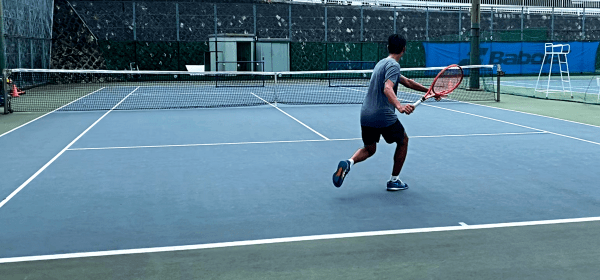
Momentum measures the ‘motion content’ of an object and is based on the product of an object’s mass and velocity. For players to perform accurate strokes with high velocity, there should be an optimal combination of linear and angular momentum. The optimal combination depends on the urgency of movement, level of balance, perception of the situation and even level of confidence. With a creation of a larger momentum, greater forces and abilities are required from a hitter to decelerate to set up and execute a successful stroke

What my Doctoral Thesis Taught me: Tennis Training for the Future Champions

Coaches teach tennis from the point of “racquet-ball” rather than movement and timing. Interception has two aspects, movement towards the ball to intercept it and create an impact point. This can differ from the concept of the hitting in which player can wait for the ball to approach before the impact. Even with the perfect contact point in which the ball lands at the string bed at the sweet spot, if the momentum of the hitter’s racquet movement does not match the movement momentum of the incoming ball, the stroke will not be satisfactory in intensity and direction

Newest published article

I would like to use the scientific approach to tennis and bring it in the easiest form to the tennis coaches around the world.

Understanding the movement patterns of the expert players can provide many data which we should use when developing tennis players.

These data showed that the more expert player is skilled in disguising his stroke intentions the more he places opponent to the disadvantageous position. Something worth to think about when talking about technical-tactical aspect of the tennis teaching

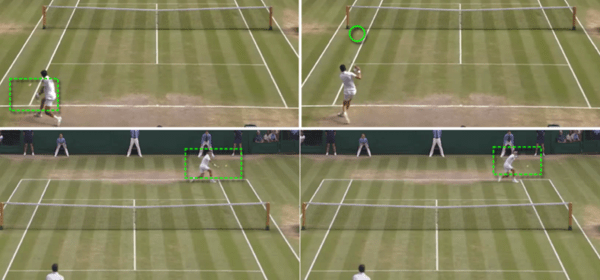
SPLIT STEP AIR PHASE

One of the greatest challenges of the dynamic tennis environment is a creation of a quick and accurate decision of the physical response (movement) corresponding to the technical-tactical intentions of the opponents’ striking actions. By prioritizing the needs of high-speed reactions, expert tennis players tend to decide of the movement direction and intensity while still being above the ground, at the air phase of the split step, as proposed by Uzu et al. (2009). From there the decision of the movement intensity and direction corresponds to receiver gathering information while increasing the much-needed muscle spindle sensitivity of the leg muscles before the ground contact, moving their center of mass away towards the edges of their support base.

INTERNATIONAL CAMPS COOPERATION

私たちは、日本のジュニアたちに、世界のトップテニスプロやコーチから練習し、学ぶ機会を提供します。

私たちの目標は、日本のジュニアと大人のプレーヤーに新しい可能性を提供し、最高レベルのテニスサービスを体験していただくことです。

私たちの提案するテニスキャンプは、世界最高峰のコーチ陣とグランドスラムのタイトル獲得者が管理・運営するテニスキャンプです。

私たちは、日本のプレーヤーにヨーロッパのテニスアプローチ、プレーヤーが望む結果をもたらす方法論を提供したいと思います。

また、私たちの協力は、トレーニングの質とこれまでの実績という一つの基準に基づいています。

ITPの根幹であるアスリートのパーソナリティ

アスリートがトレーニング量にどのように反応するかは、年齢、性別、遺伝、身体的な才能や能力、ライフスタイルなどの違いによって異なる可能性があります。特定のトレーニング刺激に対する生理的反応はほぼ予測できますが、適応の正確なレベルは個人によって異なります。また、トレーニング適応の方向性はある程度予測できますが、その大きさは個人の遺伝的特性に厳密に依存します。

テニスの呼吸法とストロークへの影響

私たちコーチの中で、選手に呼吸法やスポーツにおける正しい呼吸の重要性を教えるために、練習に時間を費やしている人はどれくらいいるでしょうか。
私たちは、ストロークテクニック、ストロークのパワーと正確さ、コンタクトポイントのタイミングを修正したり、不安レベルを下げて集中力を高めたり、疲労の発生を遅らせたりするために、多くの方法を見つけようとしています。呼吸法を練習に取り入れることで(それはとても簡単なことですが)、レベルに関係なく、プレーヤーのゲームをアップグレードすることができます。

ANTICIPATION IN TENNIS AND WHY TENNIS CHAMPIONS ARE CHAMPIONS

Through the course of tennis history, players’ performance enhancement evolved around the strokes and its effective application for the purpose of winning points in the competitive environment. Players’ stroke execution is surely one of the most researched field in the game of tennis as all tennis players, no matter of the level of their game or competitive involvement, are mostly attentive to the stroke mechanics and consistency of their body parts movement in space and time. Players usually try to be mostly aware of their own hitting space, with a tendency to underestimate the fact that tennis is a game of movements and interactions. 

Counter attacking movement

Initiating preparation for the stroke that is considered defensive not only influences the stroke mechanics but decreases the levels of forces used in the stroke production. By changing the perception from defensive to counter attacking, the player can neutralize the attacking intentions of the opponent, placing him/her to the unfavorable position at the court

Attention in tennis. Transition from an external to the internal focus

Tennis game relates to the changes from external to internal focus. Incoming ball with all the changes in intensity and pace should be recognized as soon as possible so the prediction of the ball bounce would quicken the preparation for the technical-tactical execution. 

Players focus externally to determine the properties of the incoming ball and make a decision of the preparation and timing of their set-up for the stroke. As the ball is external object to which trajectory and intensity a player responds, players are in need of the recognizing the external stimulus – ball. As soon as the spatio-temporal characteristics (intensity, pace and court area where the ball will bounce) of the incoming balls are recognized, player can transition the attention to creating internal (own) responses. Internal responses are determined by the decision of the movement response and the technical-tactical execution

Enhancing Tennis Performance: The Role of Perceptual-Cognitive Skills

Tennis game is characterized by the short distances between contestants (baseline to baseline distance is 24 m) with players’ changeable (and unpredictable) stroke executions imposing spatiotemporal constraints on opponents’ decision-making and movement response. As reaction time presents a time spent from detecting a stimulus to creating a movement response, receivers with quicker reaction time should be able to decide and create an earlier movement response, decreasing the sense of urgency when transitioning from their current position to the position of impact

Tennis game, the game of momentum / テニスの試合、勢いのゲーム

テニスは、空間と時間によって決められた目標である特定のインターセプトポイントに到達するために、一定のペースと強度の動きを作り出すことを目的としたスポーツである。テニスのパフォーマンスは、未来のインパクト・ポイントに向かって近づいてくるボールに対して、プレーヤーがどのように運動の勢いを加えるかに大きく影響される。

早稲田大学での博士論文が教えてくれた優勝パフォーマンスとは?

進入してくる方向を検知する前に最適なコートポジションに移動するという概念としての「予測」は、テニスの指導や応用において非常に困難な局面を示している。その最も難しい点は、テニスが打撃のスポーツであり、インターセプトのスポーツではないと考えられていることでしょう。コーチはテニスを動きやタイミングではなく、「ラケット・ボール」という観点から教えています。インターセプトには、ボールに向かってインターセプトする動きと、インパクトポイントを作る動きの2つの側面がある。これは、インパクトの前にボールが近づいてくるのを待つことができる打撃の概念とは異なります。ボールがスイート・スポットのストリング・ベッドに着地するような完璧なコンタクト・ポイントであっても、ヒッターのラケットの動きの勢いが、入ってくるボールの動きの勢いと一致しなければ、ストロークの強さも方向性も満足のいくものにはなりません。したがって、ボールをインターセプトし、効率の高いストロークを生み出すためには、ヒッターはボールに向かって動き出す必要があります。

スプリット・ステップ・エアフェーズ

動的なテニス環境における最大の課題の1つは、相手の打撃動作の技術的・戦術的意図に対応した身体反応(動作)の迅速かつ正確な判断を生み出すことである。宇津ら(2009)が提唱するスプリットステップの空中フェーズでは、高速反応の必要性を優先することで、熟練したテニスプレーヤーは、まだ地上にいる間に動作の方向と強度を決定する傾向がある。そこからの動作強度と方向の決定は、接地前に脚筋の筋紡錘の必要な感度を高めながらレシーバーが情報を収集し、重心を支持基盤の端の方に移動させることに対応する。

1 2 3 22