自己フォーカストレーニングとは、選手がある目標を達成するために必要な状況を完全に認識することを促すものです。選手は、課題を克服し、練習課題の目標を達成するために必要な自分の能力を理解している必要があります。選手は、知識だけではなく、解決や意思決定のプロセスにおける経験を振り返り、必要な時に知識を再構築するために、コーチから独立して意思決定を行う能力を備えている必要があります。

Play Smart Tennis – MIND YOUR GAME – Anticipate! Don’t participate
by Milos Dimic, Sports Neuroscience PhD
自己フォーカストレーニングとは、選手がある目標を達成するために必要な状況を完全に認識することを促すものです。選手は、課題を克服し、練習課題の目標を達成するために必要な自分の能力を理解している必要があります。選手は、知識だけではなく、解決や意思決定のプロセスにおける経験を振り返り、必要な時に知識を再構築するために、コーチから独立して意思決定を行う能力を備えている必要があります。

テニスにおける先読みについて、また先読みをどのようにして身につけるかについて、多くの議論がなされています。予測能力に優れたプレーヤーは、普通のテニスプレーヤーに比べて大きなアドバンテージを持っています。彼らはゲームの合図を読むことができるので、ポイント中に相手の一歩前に出ることができます。反応が早く(考えることが少なく)、ポジションを取るのも早い(早く動いているわけではないが、そのように見える)ため、より効率的な技術と戦術の実行が可能になります。彼らは自分のゲームをコントロールしているのです。
予測は、状況認識の一部です。予測の意味の一つは、「期待」です。しかし、プレーヤーが何かを期待できるのは、その何かが起こる準備ができている場合だけです。過去に同じようなことが起きた経験があったり、訓練を受けていたりすると、プレーヤーは何かが起きることに備えることができます。このようにして、プレイヤーは以前に起こった同じ状況の手がかりや要素を認識することができるのです。

Through the course of tennis history, players’ performance enhancement evolved around the strokes and its effective application for the purpose of winning points in the competitive environment. Players’ stroke execution is surely one of the most researched field in the game of tennis as all tennis players, no matter of the level of their game or competitive involvement, are mostly attentive to the stroke mechanics and consistency of their body parts movement in space and time. Players usually try to be mostly aware of their own hitting space, with a tendency to underestimate the fact that tennis is a game of movements and interactions.

To be able to produce consistent level of performance at the physical (visible to eye) level, athletes are in need of the rested and productive brain, prepared to create mental images and connect them to the muscle fibers producing the most optimal movement
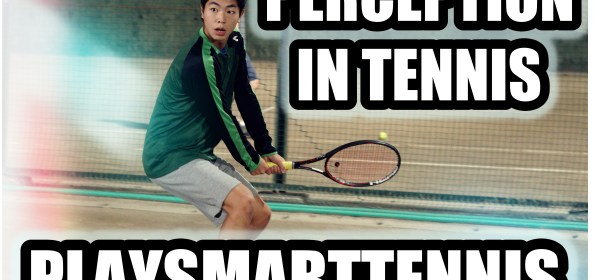
Visual system is the dominant sensory system and critical for detecting relevant cues for an appropriate motor response. As such, for successful performance, an athlete, especially in tennis, must identify and attend to relevant visual cues as early as possible

Direction of the stroke is related to the timing and angle of the impact point. The unwritten rule is that the ball will be following the direction to which strings of the racquet are directed to at the point when racquet intercepts the ball. Usually, in order to perform at their best, the players change timing of torso rotation to the ball while changing direction of the stroke
 Play Smart Tennis - MIND YOUR GAME - Anticipate! Don’t participate